

What It Looks Like When Someone Else Makes the Food
It's a Friday morning in the middle of September. A mother I've been talking to for weeks opens her front door, still in that stage of late pregnancy where everything aches slightly and nothing fits, and there are bags on the step and a week of her meals inside them.
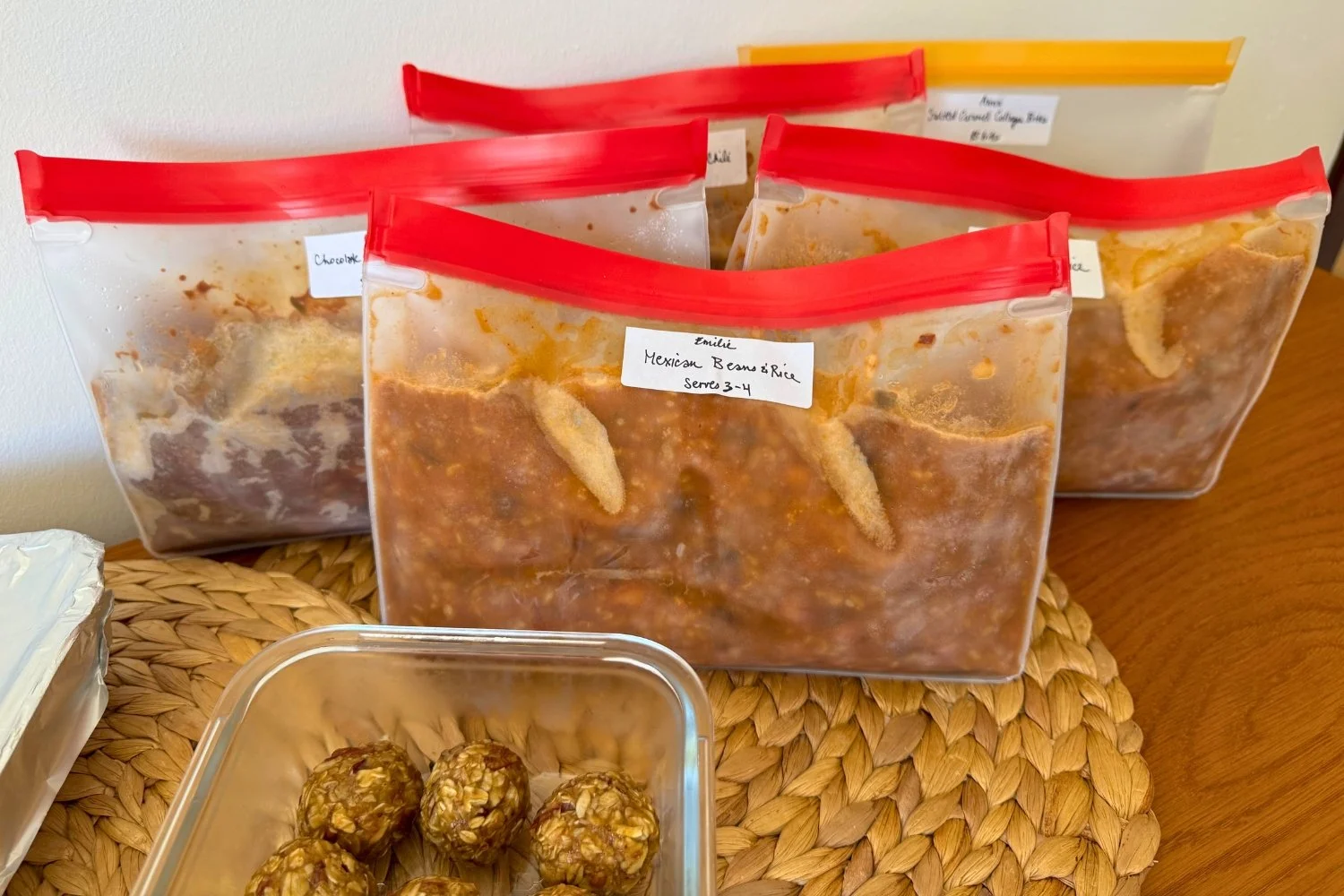
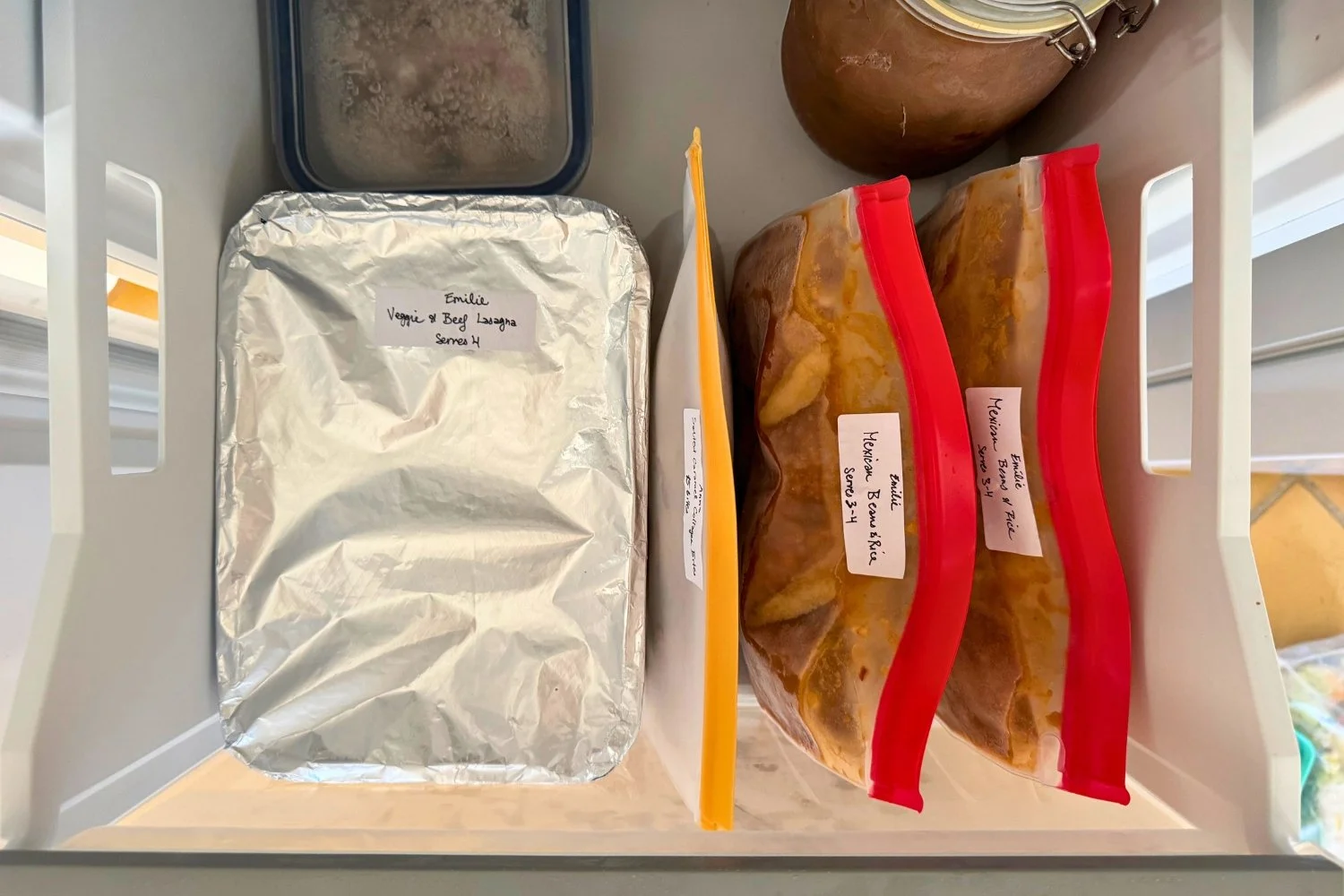
We don't rush it. I bring the bags into her kitchen and we open the freezer together, because the freezer is always the real conversation. She has a small one, most people here do, and we work out what comes out to make room. Then I stack the meals in and read her the labels as I go, so she knows what's there and where I've put it.
That's it. That's the whole dramatic event. But she has just crossed something off her list that had been sitting there, unspoken and heavy, since about week thirty.
This is what a postpartum meal delivery actually looks like from the inside. I've been making postpartum food for mothers around Lisbon for a while now, and I've noticed that the women who hesitate longest are rarely the ones who doubt the food. They're the ones who can't quite picture the process.
Back in April I wrote about why you don't have to cook right now, and that post was about permission. About the guilt, and about the fact that in almost every culture on earth the new mother was fed by somebody else. This post is a different thing entirely. This is me actually opening the door and showing you the operation, because women hesitate for two reasons: because they aren't sure they deserve the help, and because they can't picture how it works. (If it's the first one, April's post is the one for you.)
So let me show you the second.
How ordering a postpartum meal service actually works
It begins with an enquiry. You send over the basics: your due date, any allergies, the practical things I need before I can say anything useful.
Then I come back to you, and we talk properly. Sometimes over WhatsApp in fragments across a week, sometimes on a call.
I want to know what your birth is likely to look like, because a caesarean recovery and a vaginal birth ask slightly different things of your digestion in the first fortnight. I want to know whether anyone eats with you and whether they have opinions. I want to know about your kitchen, how big your freezer is, whether you have an oven, and whether there's someone around in the first weeks or whether you'll mostly be doing this on your own.
You then choose your meals from my menu. Every dish on it was designed for a postpartum body specifically: to support healing, to replace what birth depleted, to encourage milk supply, and to be gentle on a digestive system that has been through a great deal. That's the difference between this and any good prepared meals company. You're not ordering dinner. You're ordering food built for what your body is doing right now.
None of this is small talk. By the end of it I know what your food should be, and you know exactly what's coming.
Your postpartum meals are cooked well before you need them
This is the part that surprises people, so I'll be specific about it.
Your food is not made in a panic the week your baby arrives. It's made weeks earlier, in daylight, in an ordinary kitchen, across a handful of planned days.
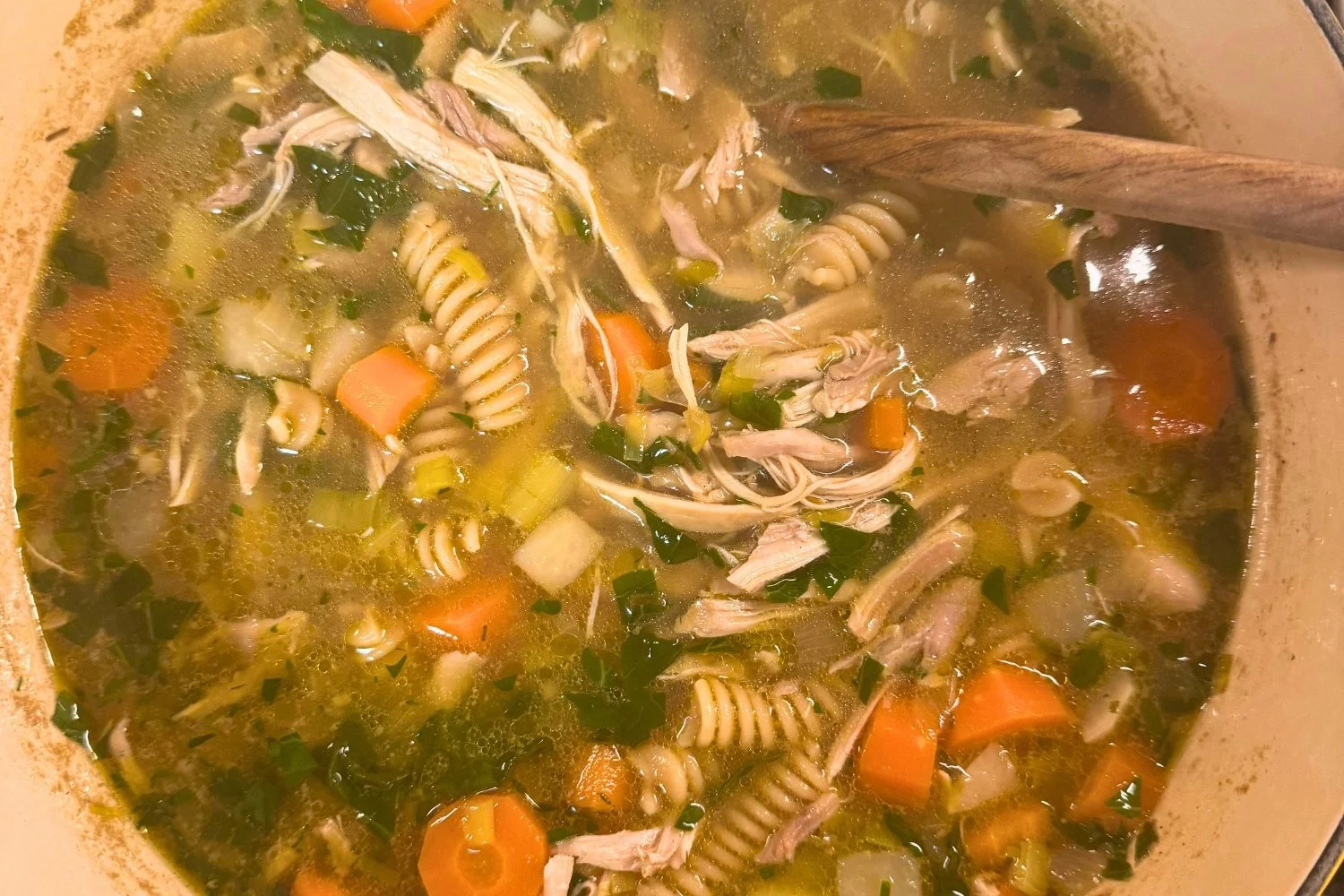
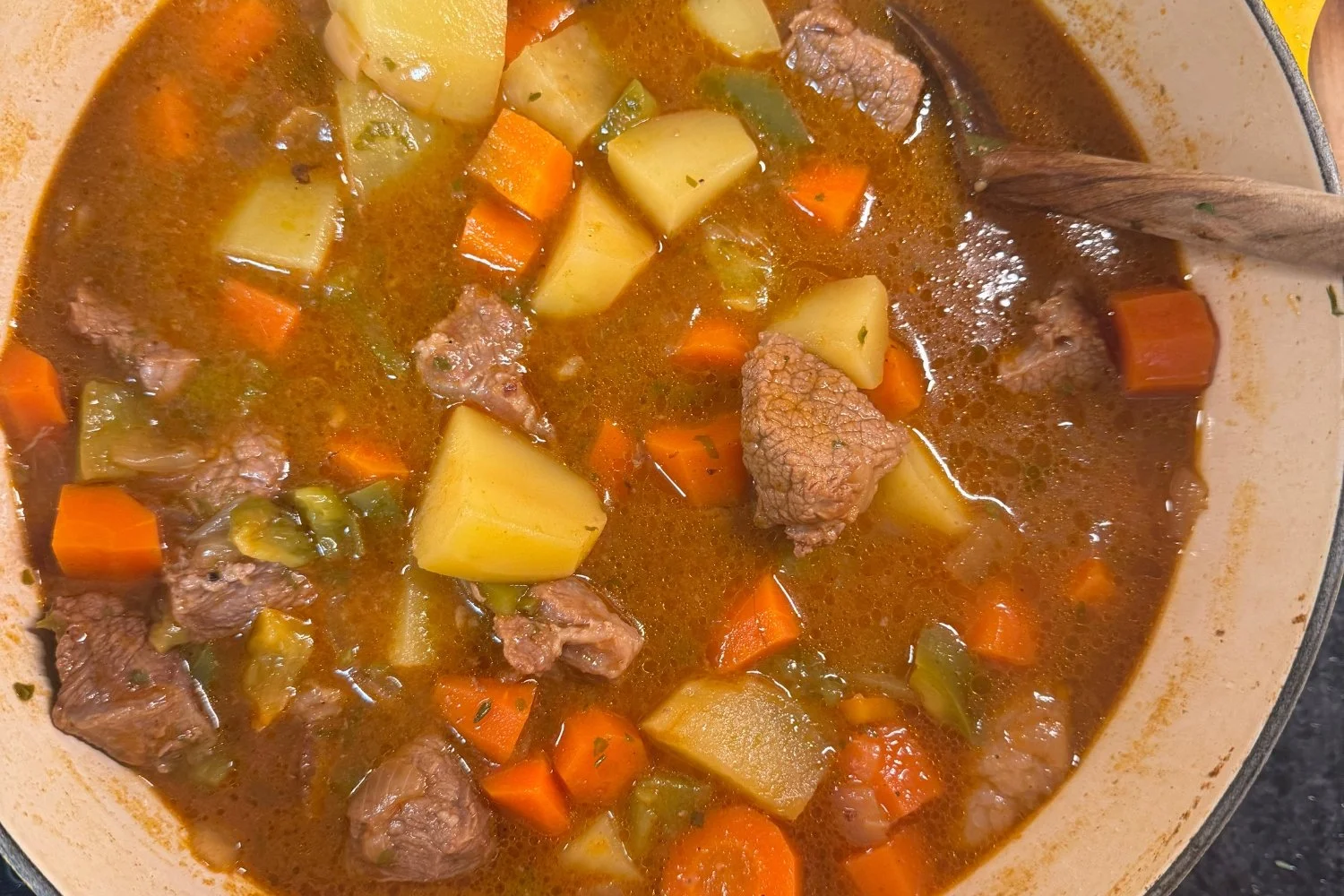
There's a shopping day, which is genuinely the least glamorous part of this job and involves me pushing a trolley around with a list sorted by aisle. Then there are the cook days. On one of them a chicken chilli and a lasagna go on together, because they overlap and the chopping doubles up. On another a golden chicken and rice soup goes on the hob while a turmeric lactation chai simmers beside it, mostly unattended, filling the whole house with a spicy warming smell.
Then there's a day for the smaller things. The snack batches, collagen bites, oat bars, energy balls, and the pantry meals if you've ordered them. And then labelling, which takes longer than anyone imagines, because every single meal gets its name, its date and its reheating instructions.
I aim to have your whole order finished about a week before the meal delivery date we've agreed on, which itself usually sits about a week before you're due. I tell you when it's done, because knowing that the food already exists is worth a surprising amount to a woman in her last fortnight.
What's included in a postpartum meal delivery
It varies with the package, but the shape of it is always the same.
Frozen meals, in vertical freezer bags that stand upright and take minimal space, portioned as family meals of three to four servings each. Warming, one-pot, protein-heavy, built for a body that is rebuilding blood and tissue and running on broken sleep. Chilli, lasagna, soups, stews, the food I wrote about designing back in March.
Snacks, which matter more than you’d think, because a huge amount of postpartum eating happens one-handed at two in the morning while feeding.
A postpartum healing herbal tea and a turmeric lactation chai, in every order, because warm drinks do quiet healing work in those first weeks.
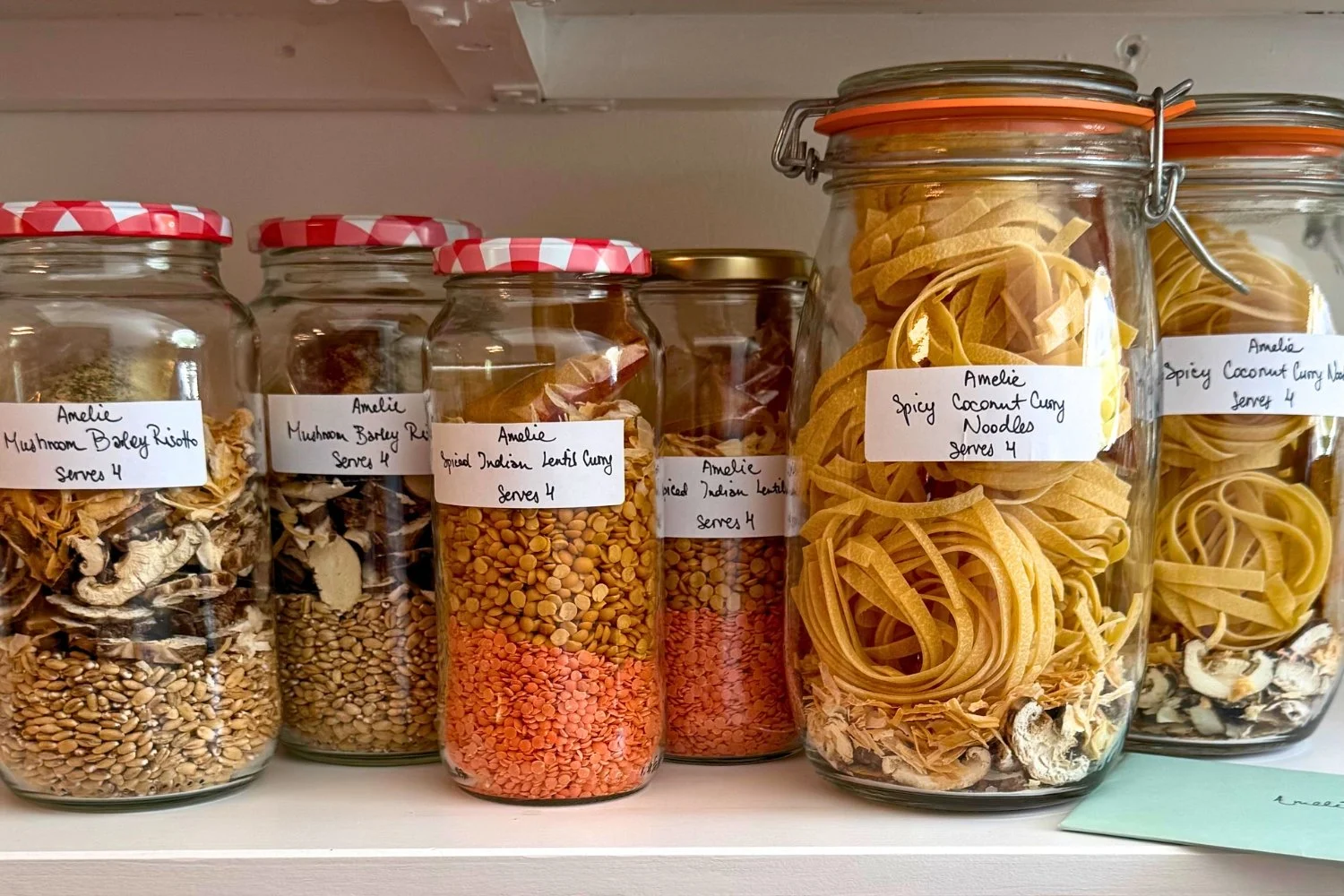
Pantry meals, if you add them, which sit in the cupboard rather than the freezer and need boiling water plus a few staple ingredients you almost certainly already have. Most come together in around thirty minutes. Those are for weeks three and four, when the freezer is running low and nobody has been to the shops.
The cards. A digital document with reheating instructions for everything, which lives on your phone, and a set of handwritten cards that stay with the food. And a thank you card, because you are letting me be part of one of the biggest weeks of your life and I don't take that lightly.
Why every meal comes with reheating instructions
The reheat cards are a small thing, but they're one of my favourite parts of an order.
Here's the thinking: these meals aren't ones you made, so you have no reason to know how long the lasagna needs from frozen or whether the chilli is better on the hob than in the microwave. Without the cards, that becomes one more thing to work out at the exact moment you have the least capacity for working anything out.
So it's all written down in plain language, on paper, right next to the food. From the freezer, from the fridge, how long, what temperature, what to add at the end if you have it. Your partner can follow it. Your mother can follow it. A friend who has come over to help and doesn't want to get in your way can open the freezer and get on with it.
Which means that when it gets to six in the evening and you're pinned under a cluster-feeding baby, the answer to dinner is already sitting in the freezer with the instructions attached. Nobody has to plan anything. You just get handed a warm bowl.
What happens if the baby comes early?
It's a fair question, and one worth answering honestly.
Because your order is usually finished about a week before your meal delivery date, an early baby doesn't mean an emergency in my kitchen. It mostly means I get in the car sooner.
What actually makes this work is that I stay in touch as your due date approaches. We keep talking. If things start moving early, tell me, and I will do everything I can to get your food to you when you need it rather than when the calendar said so.
That's exactly what happened with Selina. Her baby arrived before her planned delivery date, so we adjusted, and her meals came the day she got home from hospital.
"She delivered the food on the day we left the hospital, and it was so incredibly helpful to have lunch and dinner sorted. Caring for a newborn is overwhelming, and you need to feed yourself as well. We ended up going for a second week because it made such a difference."
— Selina
And here's the thing: if you order one week of meals and find you'd like another, message me and I will do my best to put it together for you.
Common questions about postpartum meal delivery
How far in advance should I order? Most mothers book somewhere between weeks 28 and 34. That gives us time to talk properly, and time for me to cook and freeze everything well before your due date. Later than that is usually still possible, so ask rather than assuming it's too late.
How much freezer space do I need? Less than you'd think. The meals are frozen flat in vertical bags that stand upright, so a standard Portuguese under-counter freezer handles a week's order comfortably. We sort the space together when I deliver.
Do you deliver outside Lisbon? I deliver across the Greater Lisbon area, with a small delivery fee depending on the distance. If you're further out, message me and we'll see what's possible.
Can my partner or family use the meals without me? Yes, and that's the point. Every meal comes with written reheating instructions, so anyone in the house can put dinner together without asking you a single question.
What if I'm still eating for allergies or restrictions? Tell me at the enquiry stage. Allergies and dietary needs are part of the first conversation, and there are vegetarian, vegan, and gluten free options available. I can also usually accommodate most allergies.
Book a postpartum meal delivery in Lisbon
I make postpartum food for families across the Greater Lisbon area. Warming, nutrient-dense, freezer-ready meals designed by a perinatal nutrition expert, cooked for you in small batches, labelled clearly, and delivered to your door before your baby arrives.
See the Postpartum Meal Service and packages here →
And if you'd rather build your own freezer stock, or you're doing this on a tighter budget, my free Postpartum Meal Prep Guide will walk you through it from around week thirty-two.
xx Fiona
