

How I Design Postpartum Meals (And Why They're Different From 'Healthy Food')
If someone asked you to picture a "healthy meal," what would come to mind?
For most people, it's a salad. Maybe a smoothie bowl. Something raw and green and beautifully arranged on a white plate. And in most seasons of life, those meals are wonderful.
But if you're recovering from birth — if your body is healing, your hormones are shifting, your energy is stretched to its limit, and you're feeding a newborn around the clock — a cold green salad is not what your body is asking for.
I know this might sound surprising. We've been told for so long that healthy eating looks a certain way. But postpartum nutrition operates by a different set of rules. And understanding those rules is at the heart of everything I do.
In January, I wrote about what the fourth trimester really is and why postpartum nutrition matters more than most people realise. In February, I shared a practical guide to eating well in the first seven days after birth. This month, I want to take you behind the scenes — into my kitchen, into my thinking — and show you why I design postpartum meals the way I do. What goes into every choice, every ingredient, every container that arrives at your door.
Because none of it is random. And all of it is for you.
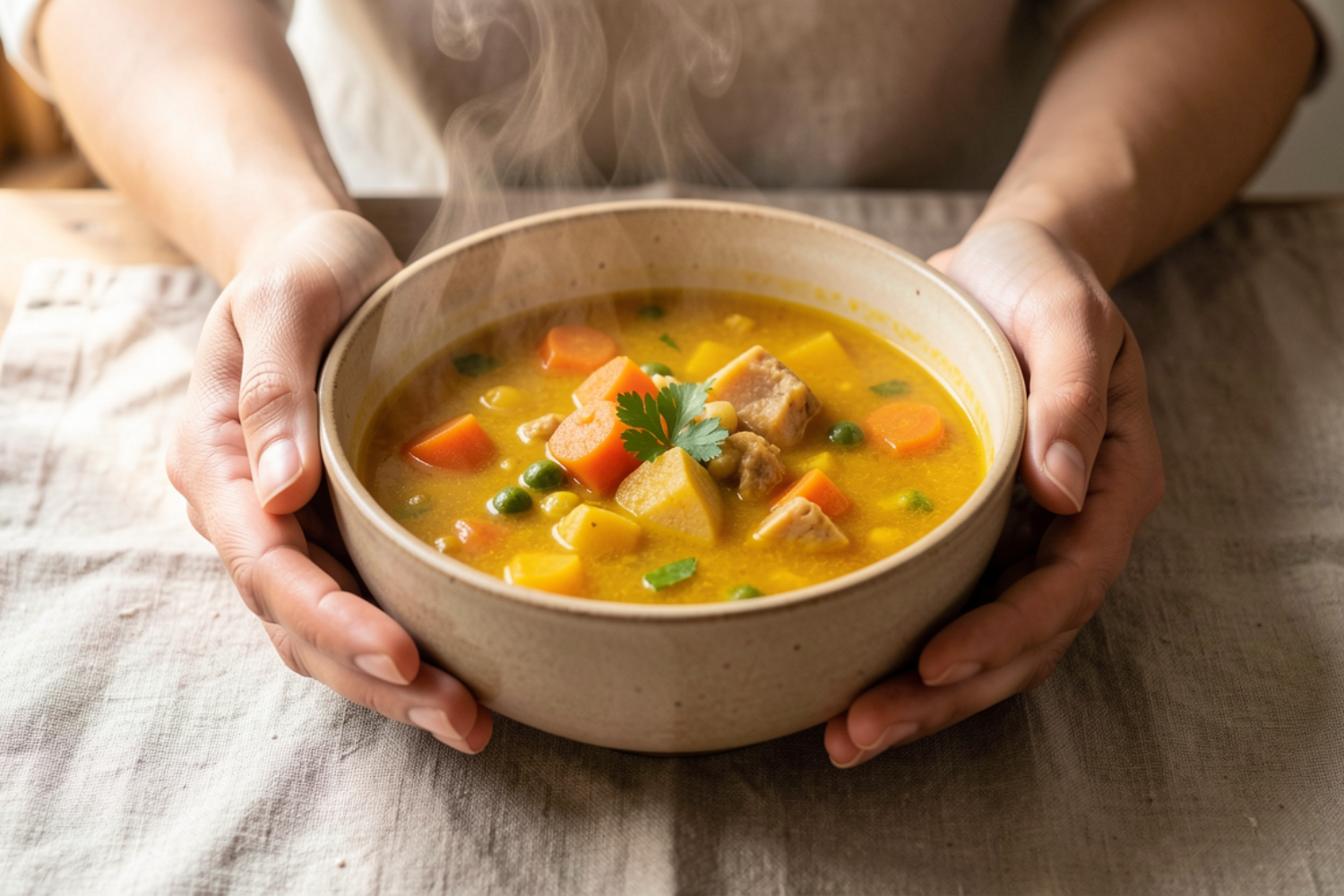
"Healthy food" isn't always healing food
Here's something I wish more people understood: healthy food and healing food are not always the same thing.
A raw kale salad is healthy. A cold-pressed juice is healthy. A grain bowl with raw veggies and a tahini drizzle is healthy. But none of those meals are designed for a body that has just been through birth. They're not designed for a digestive system that's recovering, for a mother who's eating one-handed at 2am, for a body that needs deep, efficient nourishment with the least amount of effort.
When I design a postpartum meal, I'm not thinking about what looks good on a plate or what's trending in the wellness world. I'm thinking about what your body actually needs in this specific moment. And that changes everything.
It changes the temperature of the food. It changes the texture. It changes the way I cook it, the ingredients I choose, and even the container it comes in. Every detail is shaped by one question: what will help this mother heal, rest, and feel held?
This isn't about dismissing conventional healthy eating. It's about recognising that the postpartum body has its own language — and learning to listen to it.
Why warming foods matter most after birth
If there's one principle that guides every meal I make, it's this: warmth first.
Warm, cooked food is easier for your body to digest. And after birth, that matters more than you might think. Your digestive system has been through a lot — it was compressed during pregnancy, it's readjusting to your organs shifting back into place, and it's working alongside a body that's simultaneously healing, producing milk, and running on very little sleep. Asking it to break down raw, cold, fibrous food on top of all that is like asking someone to run another lap when they've just crossed the finish line.
Warm food is gentler. It arrives in your stomach already partially broken down by cooking, so your body can absorb the nutrients more quickly and with less effort. That means more energy goes toward healing and recovery — and less toward digestion.
This isn't a new idea. It's actually one of the oldest ideas in postpartum care.
In China, new mothers have traditionally been nourished with warm soups and congee for weeks after birth. In India, meals are rich with ghee, warming spices, and soft lentils. In Korea, miyeokguk — a warm seaweed soup — is the first meal a mother eats after delivery, and she continues to eat it daily for weeks. In Latin America, warm broths and stews are central to the postpartum period. These traditions span different continents, different cultures, different ingredients — but the underlying wisdom is the same: a healing body needs warmth.
When I design a meal, I start there. Every soup, every stew, every bowl of congee — it all begins with the same intention. Warm her from the inside out.
If you're still pregnant and wondering what you should be eating now, my post on essential nutrition during pregnancy covers how many of these same principles apply before birth, too.
Why bone broth is a postpartum foundation, not a trend
You've probably seen bone broth everywhere in the last few years. It's in health food shops, on superfood lists, in influencer posts. And I understand the scepticism that can come with anything that starts to feel like a trend.
But bone broth was a cornerstone of postpartum care long before it had a marketing team.
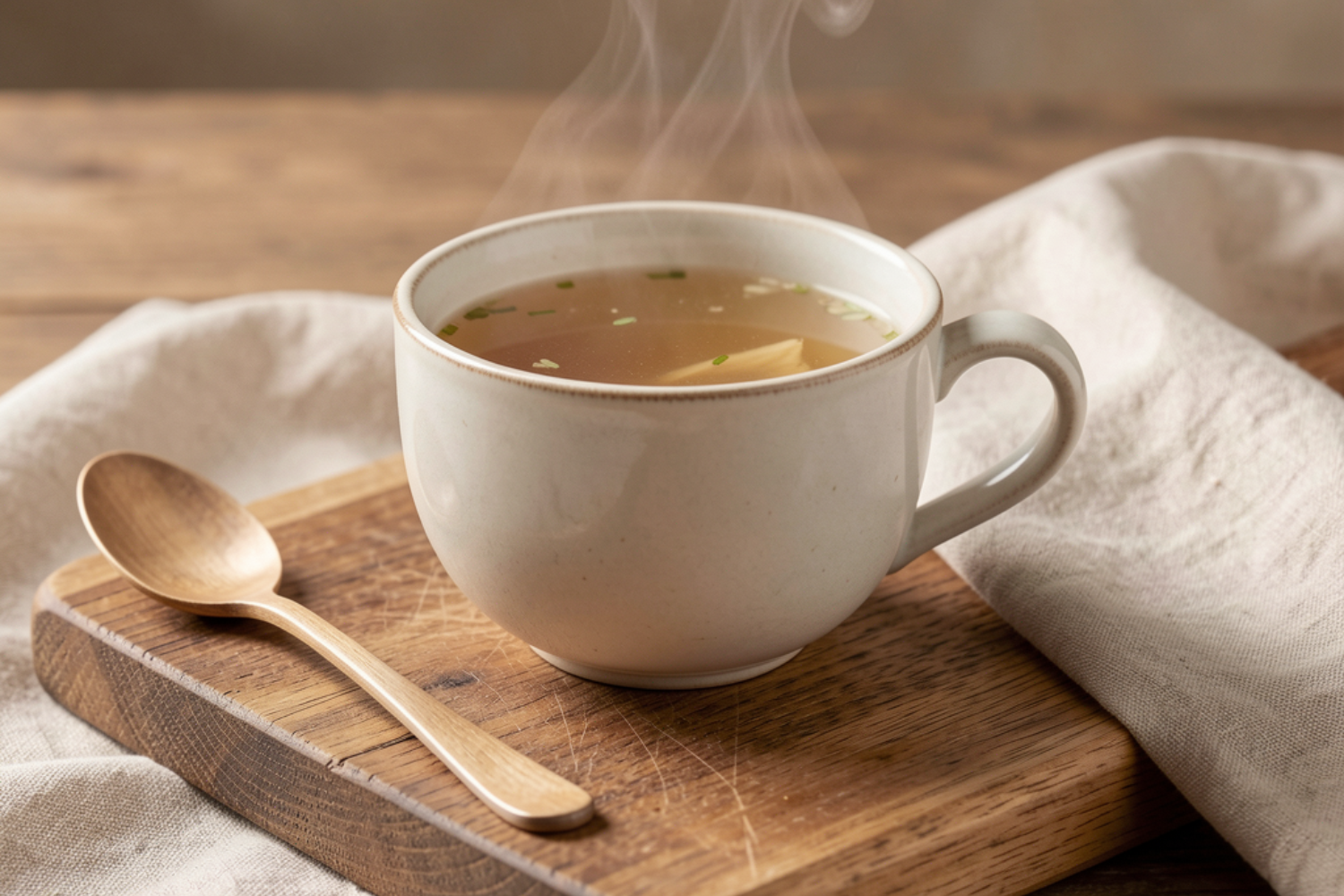
When you slow-simmer bones for hours, what you get is a liquid that's rich in collagen, gelatin, glycine, and easily absorbed minerals like calcium and magnesium. Collagen supports tissue repair, which makes it essential after birth, whether vaginal or caesarean. Gelatin soothes and supports the gut lining, which helps with nutrient absorption at a time when your body needs to get the most out of every meal. The amino acids support your immune system and help regulate inflammation. And because it's a mineral-rich, it hydrates more deeply than water alone — something your body is craving as it loses fluid through bleeding, sweating, and breastfeeding.
But beyond all of that, there's something simpler: bone broth is easy. Easy to sip. Easy to digest. Easy to warm up one-handed. Easy to keep in a mug beside your nursing spot.
It's the kind of food that doesn't ask anything of you. And in the early weeks of motherhood, that's worth everything.
This is why bone broth isn't just one meal among many in my service. It's a foundation. It's in my soups. It's in my stews. It's something I encourage every mother to have on hand, whether she's ordering from me or prepping on her own.
Why I choose one-pot meals for postpartum recovery
When you look at my menu — the Golden Mama Healing Stew, the Lemony Lentil Soup, the Chicken Noodle Soup, the Hearty Beef Stew with Root Veggies — you'll notice something: almost everything is a one-pot meal.
That's not a coincidence. And it's not because I'm cutting corners. It's because one-pot meals are perfectly designed for postpartum.
From a nutritional standpoint, one-pot cooking means nothing is lost. When you simmer vegetables, beans, grains, and meat in a single pot, all the nutrients stay in the liquid. The vitamins and minerals that would normally leach out during cooking? They're right there in the broth you're eating. Every spoonful is concentrated nourishment.
The texture is ideal, too. Hours of slow cooking make food soft, broken down, easy on a recovering digestive system. The flavours deepen and meld. The result is a meal that's both deeply comforting and deeply nourishing — two things that don't have to be separate.
But there's another reason I love one-pot meals, and it has nothing to do with nutrition. It's about ease.
A one-pot meal freezes beautifully. It reheats in minutes. It goes into a single container. Your partner or mother or doula or friend doesn't need a recipe or instructions — they just need a pot and a stove. At midnight, when the baby has just gone back to sleep and you realise you haven't eaten since lunch, you can pull a container from the freezer, warm it up, and sit down with something that genuinely nourishes you. No assembly. No thinking. No decisions.
I think about that moment — that midnight, one-handed, barely-awake moment — every single time I design a meal. If it doesn't work for that mother, in that moment, it doesn't make the menu.
Every ingredient earns its place
One of the things I love most about this work is the intention behind every ingredient. Nothing goes into a meal just because it tastes good — although it does need to taste good, because comfort matters. Everything is chosen for a reason.
Take the turmeric in my Golden Mama Healing Stew. It's there because turmeric supports your body's natural response to inflammation — and after birth, your body is managing a lot of inflammation. I pair it with black pepper and a healthy fat because that's how your body absorbs it best. It's a small detail, but it's the kind of detail that adds up.
Or the liver in my Hidden Liver Recovery Bites. I know — liver isn't exactly a crowd favourite. But it's one of the most nutrient-dense foods on the planet, and it's incredibly rich in iron, which is exactly what your body needs after the blood loss of birth. So I tuck it in gently, alongside flavours that make it genuinely enjoyable. You get all the benefit without having to think about it.
The greens in my Hidden Greens Meatballs follow the same logic. Iron and folate, nestled into something your whole family will eat. The collagen in my Salted Caramel Collagen Bites supports tissue repair and gut health — but what you taste is salted caramel. The ghee, the coconut milk, the warming spices in my dishes — all of it serves a purpose while also making you feel like someone is taking care of you.
That's the balance I'm always looking for. Deeply intentional, but never clinical. Nourishing, but also delicious. Healing, but also warm and familiar and comforting.
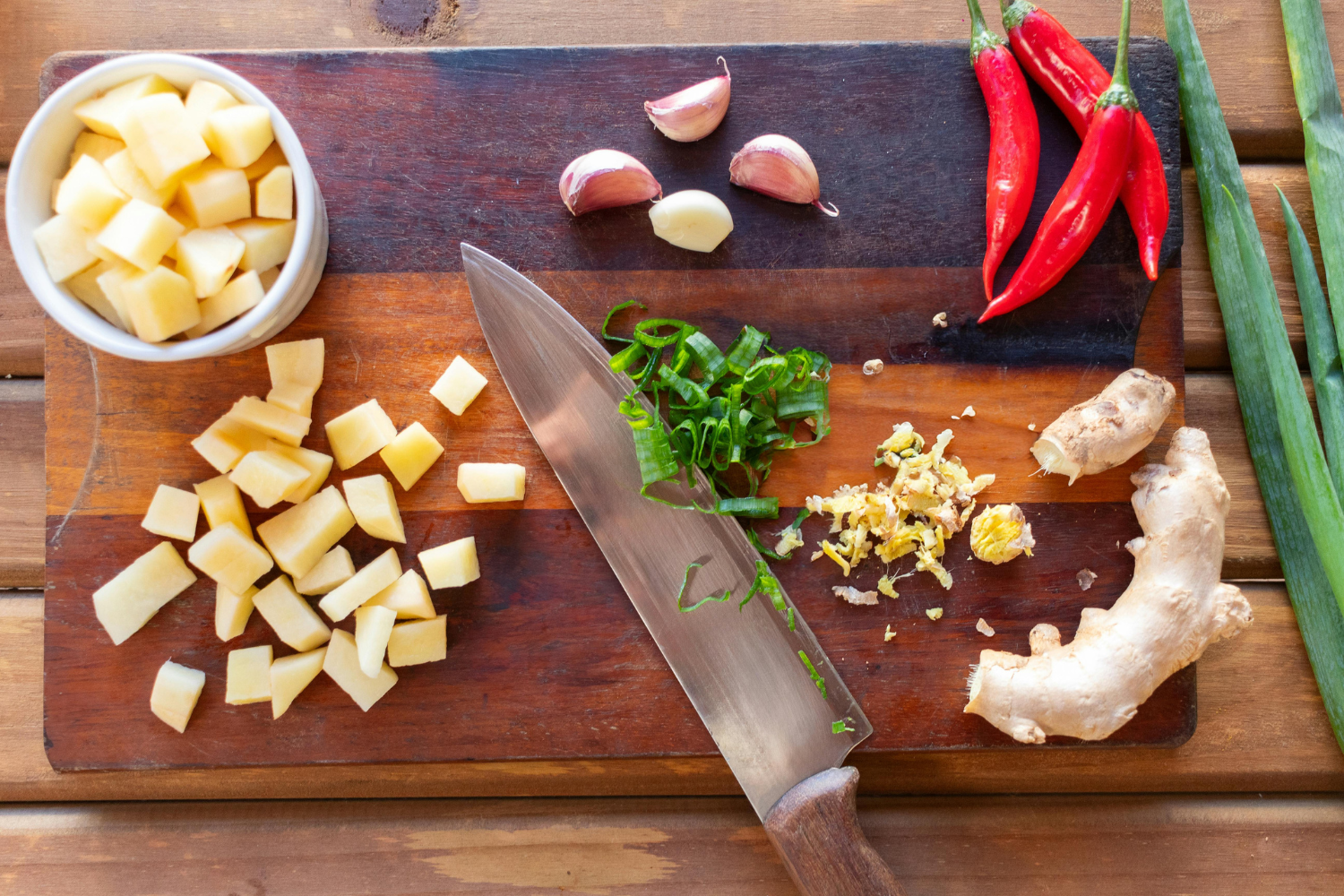
What I hope you feel when you eat this food
I can talk about nutrients and digestion and cooking methods — and all of that matters. But if I'm being completely honest, the thing I care about most is how you feel when you sit down with one of these meals.
I want you to feel like someone thought about you.
Not about the baby — someone is always thinking about the baby. About you. Your hunger. Your exhaustion. Your healing body. Your quiet, unglamorous, extraordinary work of becoming a mother.
I want the food to feel like a warm hand on your back. Like someone saying, “sit down, I've got this, you just eat.” I want it to be one less thing to figure out, one less decision to make, one moment in your day where you are cared for instead of caring for everyone else.
That's what postpartum food is, at its best. It's not a diet plan. It's not a wellness protocol. It's an act of love — quiet, practical, nourishing love. The kind that shows up in a warm bowl of soup at the end of a long day.
And that's what I'm making for you.
This is what the postpartum meal service is
Everything I've described in this post — the warmth, the intention, the one-pot simplicity, the ingredients chosen with care, the meals designed for real postpartum life — this is what you receive when you order my Postpartum Meal Service.
Comforting, freezer-ready meals made by a perinatal nutritionist who has thought about every detail so you don't have to. Delivered to your door in the Greater Lisbon area, ready to reheat whenever you need them. With simple instructions so your partner or support person can warm something up for you in minutes.
If you're pregnant and planning ahead, now is a beautiful time to set this up. If you're already postpartum and the thought of cooking feels impossible, this is exactly what I made it for.
And if you'd prefer to prep your own meals, I've got you there too. My free Postpartum Meal Prep Guide walks you through a full first-week meal plan with recipes, a shopping list, and a gentle prep schedule starting at week 32. It's 40 pages of everything you need to fill your freezer before baby arrives.
However you choose to nourish yourself — you deserve to be fed well, fed warmly, and fed with care.
I'm here whenever you're ready.
xx Fiona
