

A Recipe for Recovery: Warming Congee for New Mothers
It's day three. You're propped up in bed with pillows arranged in some configuration that almost works, and there is a warm heavy weight on your chest that you cannot quite believe is yours.
Someone comes in with a bowl. It's steaming, pale and creamy, flecked with gold, a soft egg split open on top. You take it one-handed, because everything is one-handed now, and you eat.
And something in you settles.
This is congee, and I think it might be the perfect first meal after birth.
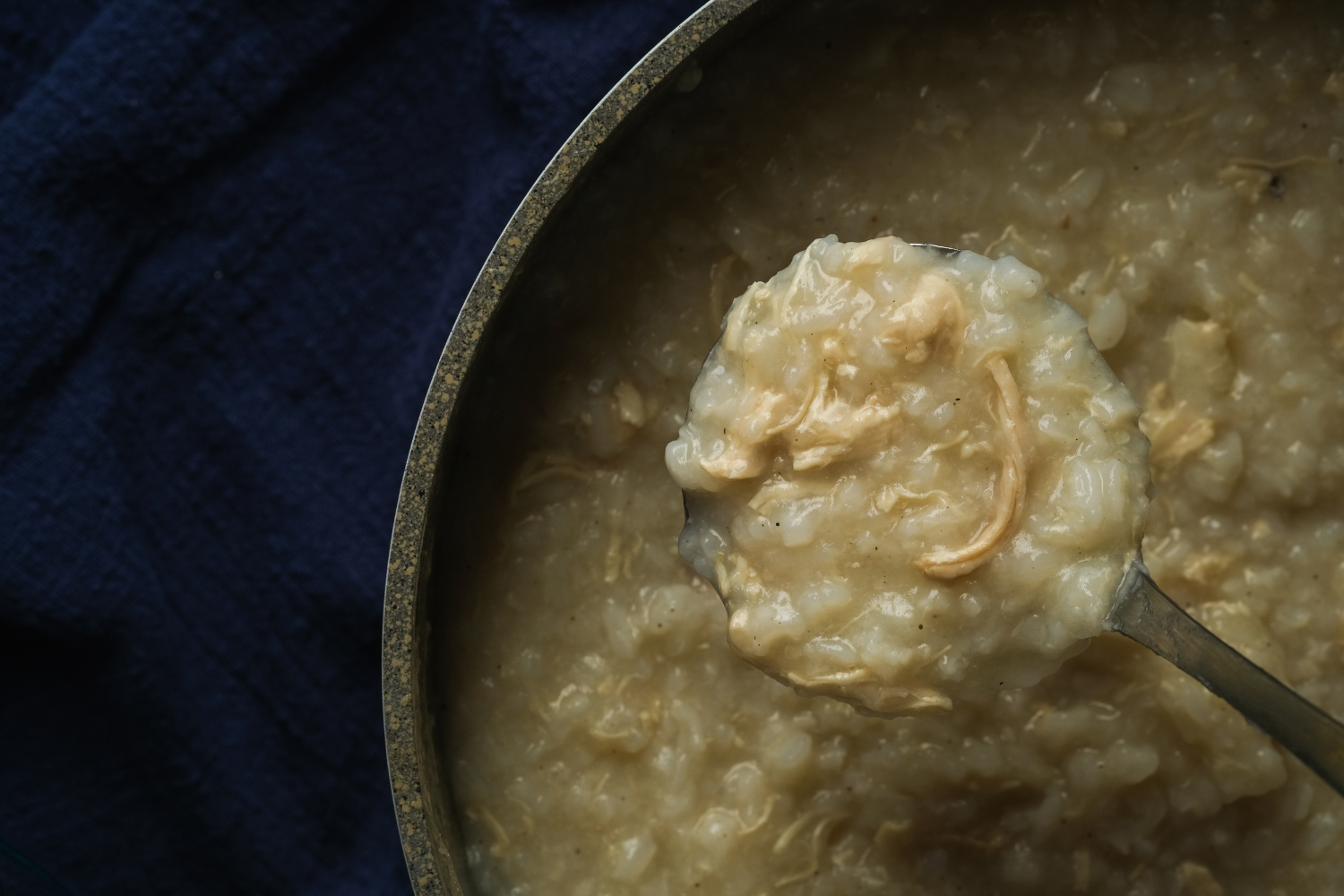
The oldest postpartum food in the world
Congee is rice cooked in far more water than seems reasonable, for far longer than seems necessary, until the grains give up entirely and collapse into something between a porridge and a soup.
It has been fed to new mothers in China for centuries, and its cousins turn up everywhere people have thought carefully about how to feed a recovering body — the ghee-rich porridges of India, the slow-simmered broths of Korea. Different grains, different spices, same instinct.
I wrote in January about why the fourth trimester asks so much of your body, and in March about how I design postpartum meals and why they're different from ordinary "healthy food". Everything in those posts, generations of women arrived at long before anyone wrote it down. They knew, without needing the science to explain it, that a woman who had just given birth needed feeding differently from everyone else at the table.
Why soft matters more than you'd think
Digestion is work. Your body spends real energy breaking food down, and the harder the food, the more it spends.
Now think about what your body is doing in the first weeks after birth. Repairing tissue. Contracting your uterus. Replacing lost blood. Producing milk around the clock. Riding the biggest hormonal shift of your life, on broken sleep, with almost nothing in the tank.
Your energy is finite, and it's already all going to healing. Every bit of effort you can not ask your body to spend on digestion is effort it gets to keep for repair.
This is what makes congee so perfect for postpartum. Cooking rice in ten cups of water for forty-five minutes does something specific: the starch swells, breaks open and dissolves. The grain has already come apart before it reaches you, so some of the work your gut would normally do has been done in the pot.
And there's a bonus nobody warns you about. Between iron supplements, dehydration, pain medication and a pelvic floor that has been through a lot, constipation is very common in the early weeks. Warm, liquidy, soft, well-spiced food is exactly what a slow system wants.
What's actually in the bowl
Every ingredient in this postpartum congee earns its place.
The rice: There's a lot of noise about cutting carbohydrates, so let me be clear: the early postpartum weeks are not the time. Your body needs energy to heal, and carbohydrates are the fastest, cleanest source of it. More still if you're breastfeeding. They also comfort — there's a reason nobody in history has handed an exhausted person a plate of raw vegetables.
The ghee: A quarter cup sounds like a lot until you know what fat does after birth. It fuels hormone production while your hormones are recalibrating, helps you absorb fat-soluble vitamins, and supports your baby's brain development through your milk. It also makes the bowl rich enough that you feel satiated and comforted.
The ginger: Warming in the way that matters here, it gently stimulates digestion and encourages things to keep moving. Warm food, warm drinks, warm spices — your postpartum body is asking for heat.
The turmeric, cumin and coriander: These are the healing spices. Turmeric and cumin carry anti-inflammatory compounds, and your body is doing a great deal of inflammatory repair right now. The black pepper isn't an afterthought either; it helps you absorb the curcumin in the turmeric.
The egg on top: This is where the bowl becomes complete. The marinated egg brings protein for tissue repair, and also choline, which almost nobody talks about, and which your body needs a great deal of after birth. Choline supports your baby's brain development and passes into your breast milk, and requirements go up while you're feeding. Egg yolks are one of the richest sources there is. One egg, split over the top, and the bowl goes from comforting to complete.
On top of the beneficial ingredients, congee is a spoon meal. No chewing, no cutting, no second hand required. It can be eaten in bed, in the dark, and reheated by someone who has never cooked anything in their life. Food that's nourishing but impossible to eat isn't nourishing — it's a nice idea in a container.
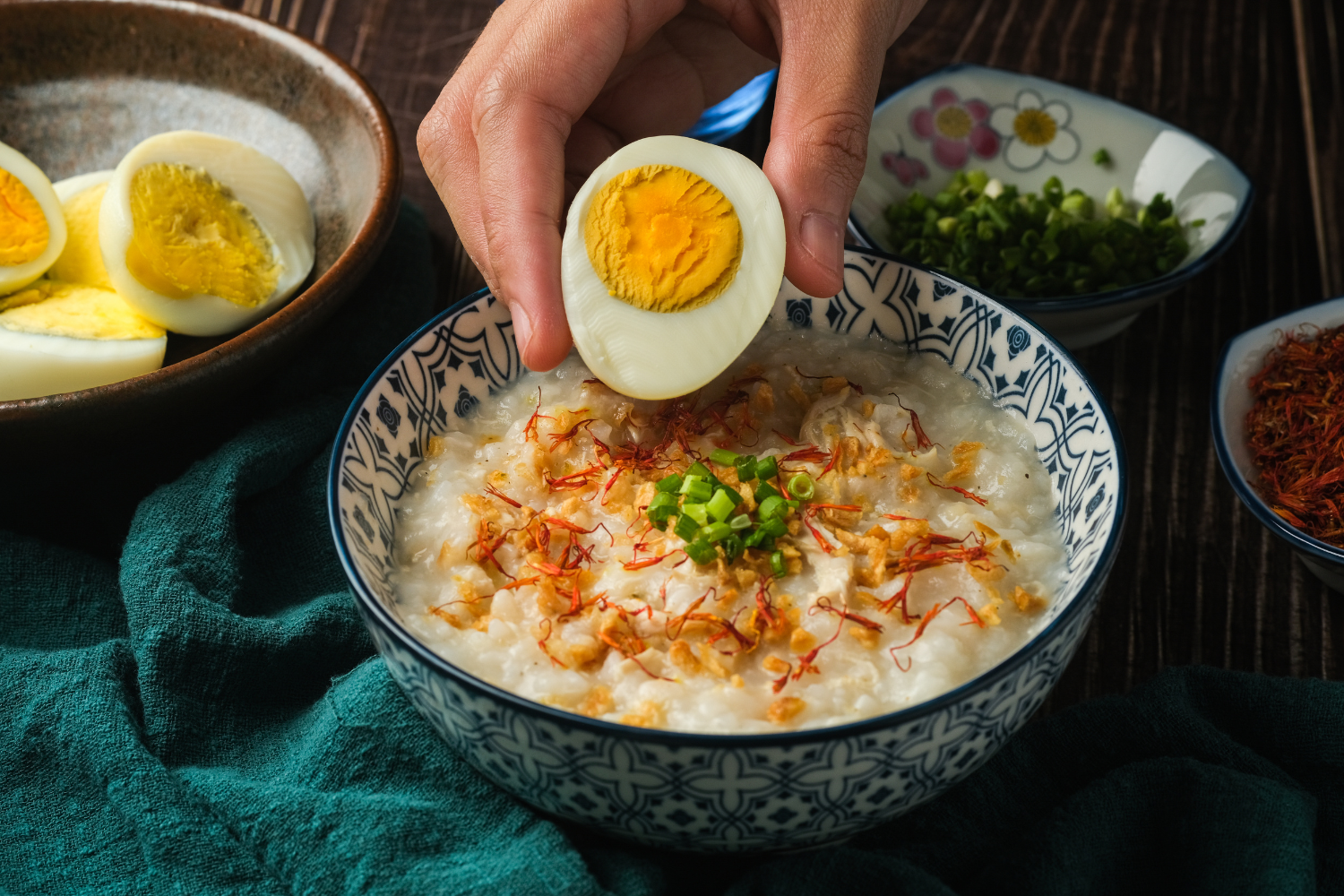
Warming Congee
Serves 4 · about 1 hour
Ingredients
1 cup jasmine rice (rinsed)
10 cups water
1/4 cup ghee
2 tsp ginger, minced
1 clove garlic, minced
1 tsp turmeric
1 tsp coriander seed, crushed in a mortar and pestle
1 tsp cumin seed
1/2 tsp black pepper
1 tsp sea salt
2 tbsp fresh coriander, chopped
4 Korean marinated eggs, for topping
Directions
Soak the rice overnight in plenty of cold water. This is optional, but it improves the texture of the finished dish. The next morning, drain and rinse the rice well before you start.
In a large pot, add the rice and water. Bring to a boil, then turn the heat down to a simmer, cover with a lid and cook for 45 minutes, stirring occasionally.
When the congee has reached a thick, creamy texture, heat the ghee in a small pot over medium heat. Add the spices, ginger and garlic. Cook for a few minutes until the spices smell fragrant. Pour the spiced ghee into the congee and stir to combine. Add the salt and taste.
To freeze, let the congee cool, then transfer to two glass containers, label and freeze. To reheat, defrost in the fridge overnight, then warm in a pot with bone broth or water. Top with a marinated egg and extra fresh coriander.
Notes
More flavour: Use bone broth or vegetable broth in place of the water. Add chicken or seafood — prawns, scallops, crab meat — during cooking.
Additional toppings: Crispy fried shallots, sesame seeds, sautéed vegetables, toasted nuts.
Make it now, eat it later
Congee freezes beautifully, so you can make it in your third trimester and forget about it until you need it. This is the whole principle behind preparing your food before birth — you need the most nourishment at exactly the moment you're least able to make it.
The eggs are the other piece of the puzzle. Korean marinated eggs keep in the fridge for up to five days and take about twenty minutes of real attention. If you're near your due date, make a batch. Better still: when your partner or your mother or a friend asks how they can help in that first week, send them this. One pot of water, a few ingredients, and a container, and you have five days of protein for topping meals without lifting a finger.
Frozen congee plus a jar of eggs in the fridge is one of the most useful meals you can plan before birth.
What this one bowl gives you postpartum
It's warm, when your body wants warmth. Soft, when your digestion is recovering. It carries the carbohydrates that give you energy, the fat that supports your hormones and your milk, the spices that calm inflammation and keep things moving, and the protein and choline that rebuild your body and feed your baby.
And it does all of that in a form you can eat with one hand, half asleep, on day three.
That's what postpartum food is meant to be. Not impressive. Not photogenic. Just exactly what you need, already made, waiting for you.
This recipe comes from my free Postpartum Meal Prep Guide — a 40-page guide with a full first-week meal plan, a shopping list, and a gentle prep schedule starting around week 32 so you're never doing too much at once. The Korean marinated eggs are in there too, along with nourishing breakfasts, soups, one-handed snacks and hydrating drinks. Most of it freezes.
Download the free Postpartum Meal Prep Guide here →
And if you're reading this with a baby already in your arms, or the thought of standing at a stove for an hour makes you want to lie down, I understand. I also offer a Postpartum Meal Service for families in the Greater Lisbon area: comforting, nutrient-dense, freezer-ready meals designed by a perinatal nutrition expert and delivered to your door, labelled and ready to reheat.
Whether you make this congee yourself or let me make it for you, I want the same thing for you. A warm bowl. A spoon. Someone bringing it to you.
Nourish first. Rest often. You deserve this.
xx Fiona
