

The Fourth Trimester Explained: Why Postpartum Nutrition Matters More Than You Think
You've probably spent months preparing for your baby. The cot is assembled. The tiny clothes are washed and folded. The hospital bag is packed (or at least you've started a list).
But here's something most mothers don't think about until it's too late: what will nourish you in the weeks after birth?
If you haven't given it much thought, you're not alone. Our culture pours almost all of its attention into the baby — the feeding schedules, the sleep training, the developmental milestones — and the mother's own recovery quietly becomes an afterthought. Something she's expected to figure out on her own, in between feeds, on very little sleep.
But your body deserves more than that. And that's exactly what this post is about.
You may have heard the term "fourth trimester." It's a simple idea with a profound shift in perspective: the first twelve weeks after birth are not just the beginning of your baby's life outside the womb. They are also a critical season of healing, recovery, and transformation for you. And what you eat during this time matters far more than most people realise.

What is the fourth trimester?
The fourth trimester refers to the first twelve weeks after birth — a period of enormous change for both you and your baby.
For your baby, it's about adjusting to life outside the womb. For you, it's about something just as significant: recovering from one of the most physically demanding experiences your body will ever go through.
During this time, your body is healing from birth. Your uterus is contracting back to its pre-pregnancy size. You're losing blood — a process called lochia that can last for weeks. Your hormones are shifting dramatically, dropping from the high levels of pregnancy and beginning to regulate again. If you're breastfeeding, your body is producing milk around the clock, which requires significant energy and nutrients. And all of this is happening on fragmented sleep, while you learn to care for a newborn.
This isn't a season of "bouncing back." It's a season of rebuilding. And the way you nourish yourself during this time can make the difference between feeling exhausted and feeling cared for.
Why food matters so much after birth
When I talk about postpartum nutrition, I'm not talking about dieting. I'm not talking about calorie counting or getting your "pre-baby body" back. I'm talking about something much more fundamental: giving your body the raw materials it needs to heal.
Think of it this way. Labour and birth are often compared to running a marathon — but honestly, it's more like running several marathons back to back. Your body has been stretched, torn or cut, and pushed to its limits. It has lost blood. It is producing milk. It is running on almost no sleep. And now it needs to repair, replenish, and restore itself.
The food you eat is what makes that possible.
When you're well-nourished after birth, the benefits show up in every part of your experience. Physically, the right foods support tissue repair, help restore the iron your body lost during birth, fuel milk production if you're breastfeeding, and give you sustained energy through the long days and longer nights. Without adequate nourishment, recovery slows down. Fatigue deepens. The nutrients you depleted during pregnancy and labour aren’t repleted. The body simply doesn't have what it needs to do its work.
But it's not just physical. There is a real and meaningful connection between nourishment and how you feel emotionally. When your blood sugar is stable, when you're well-hydrated, when you're eating warm and comforting food at regular intervals — you feel more grounded. More present. More like yourself. And when meals are already taken care of, one entire source of stress just disappears. You don't have to think about what to cook, or what to buy. That mental space opens up for rest, recovery, and time with your baby.
Every task you can take off your plate during this time gives you more capacity for what actually matters. Feeding yourself well isn't selfish. It's one of the most generous things you can do — for yourself and for your family.
The five nutrients your body needs most
Postpartum nutrition doesn't have to be complicated. It comes down to five key nutrients that your body is asking for after birth. You don't need to track them obsessively — just knowing what they are and why they matter can help you make nourishing choices without overthinking it.
Protein supports tissue repair, muscle recovery, and milk production. After the physical demands of birth, your body needs protein to rebuild. Good sources include eggs, bone broth, chicken, lentils, beans, seeds, and nuts.
Iron helps restore the blood you lost during birth and protects against postpartum anaemia — one of the most common and underdiagnosed causes of exhaustion in new mothers. You'll find iron in red meat, leafy greens, stewed dried fruits, seafood, and liver.
Healthy fats fuel hormone production, support your baby's brain development through breast milk, and help your body absorb key vitamins. Think avocado, ghee, coconut milk, olive oil, butter, and fatty fish like salmon.
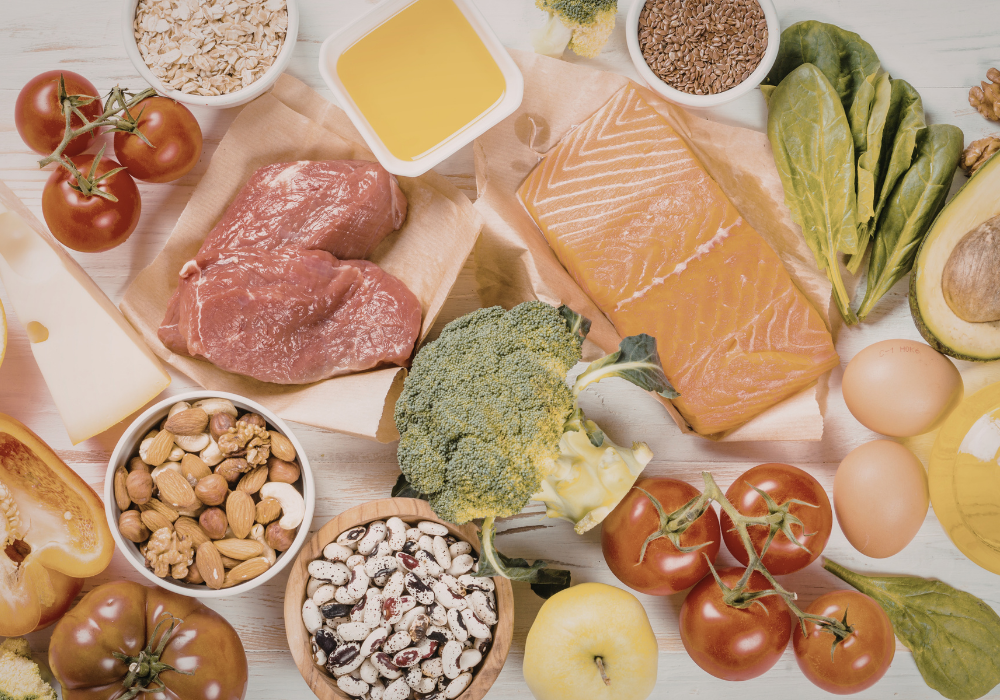
Easy-to-digest carbohydrates sustain your energy through the long, unpredictable days. This isn't the time for raw salads and cold grain bowls — your body responds best to well-cooked, warming carbohydrates like oatmeal, congee, root vegetables, and vegetable soups.
Hydration replaces the fluids your body is losing through sweating, bleeding, and breastfeeding. Plain water is helpful, but it's often not enough on its own. Mineral-rich drinks, herbal teas, coconut water, and broths all support deeper hydration.
The reassuring truth is this: postpartum nutrition isn't about eating perfectly. It's about eating warm, comforting, restorative food — consistently. Not every meal will be ideal, and that's fine. What matters is that you're fed, that the food is nourishing, and that it's there when you need it.
If you're still in the early stages of pregnancy, you might also find my post on essential foods and nutrition for a healthy pregnancy helpful — many of these nutrients matter just as much before birth as they do after.
What makes a postpartum meal different from "healthy food"
This is something I feel strongly about, and it's one of the reasons I do the work I do.
Postpartum food is not the same as what we typically think of as "healthy eating." It's not green smoothies, raw salads, or elaborate recipes that take an hour to prepare. Those things are fine in other seasons of life — but they're not what a healing body needs.
In cultures all around the world, new mothers have traditionally been fed warm, soft, slow-cooked food for the first weeks after birth. In China, it's nourishing soups and congee. In India, it's ghee-rich porridge and spiced lentil dishes. In Korea, it's seaweed soup, believed to support recovery and milk production. These traditions exist because generations of women have understood something that modern wellness culture often overlooks: a postpartum body needs warmth, comfort, and ease.
The best postpartum meals share a few simple qualities. They're warming — not cold or raw. They're easy to digest — well-cooked, soft, gentle on a system that's already working hard. They're nutrient-dense — because when you're eating one-handed between feeds, every bite needs to count. They're convenient — freezer-ready, easy to reheat, something your partner or support person can warm up for you without instructions. And they're comforting — because emotional nourishment matters just as much as the physical kind.
When food feels like care, it does more than feed your body. It feeds something deeper.
You don't have to figure this out alone
If you're reading this while pregnant and feeling like postpartum preparation is just one more thing on an already overwhelming list — I understand. It can feel like a lot.
But here's what I want you to know: it doesn't have to be complicated, and you don't have to do it all at once.
I created a free 40-page guide called the Postpartum Meal Prep Guide that walks you through everything you need — a first-week-home meal plan, a complete shopping list, and recipes for nourishing meals, snacks, and drinks that you can make and freeze before baby arrives. It's designed to be done gradually, starting around week 32 of pregnancy, a little bit at a time. Two light prep sessions a week. No pressure. No overwhelm.
And if the thought of doing it all yourself feels like too much right now, that's okay too. I also offer a Postpartum Meal Service — comforting, freezer-ready meals made for you and delivered to your door. Sometimes the most nourishing thing you can do is let someone else take care of the food.
Either way, I'm here.
xx Fiona
